

The internet rarely forgets.
Just when a controversy appears settled, an old photograph, interview or video resurfaces and forces people to revisit narratives they once accepted without question. This time, it is an old clip involving Aamir Khan and education reformer Sonam Wangchuk that has reignited a debate many believed had long been resolved.
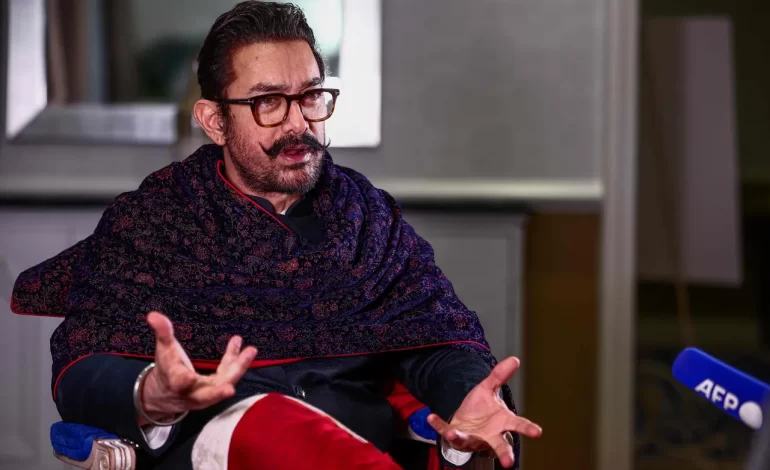
The renewed discussion began after Aamir Khan recently stated that his iconic character in 3 Idiots was not based on Sonam Wangchuk and that neither he nor director Rajkumar Hirani knew Wangchuk during the making of the film. The actor described the long standing association between the two as a misconception, while also expressing respect for Wangchuk and concern over his ongoing health and activism.
However, social media users quickly dug out an old video that appears to show Aamir Khan interacting with Sonam Wangchuk years ago, leading many to question the timeline presented by the actor. The resurfaced footage has once again placed the relationship between 3 Idiots and Wangchuk under intense public scrutiny.
For many Indians, the debate touches a deep cultural memory.
Released in 2009, 3 Idiots was more than just a blockbuster film. It became a generational phenomenon. The film challenged conventional ideas of success, criticised rote learning and encouraged young people to pursue passion over societal expectations. Rancho, played by Aamir Khan, emerged as one of Bollywood’s most beloved characters, representing curiosity, innovation and intellectual freedom.
Almost immediately after the film’s release, many viewers began drawing parallels between Rancho and Sonam Wangchuk, the Ladakh based engineer, educator and innovator known for transforming education in the region through the Students’ Educational and Cultural Movement of Ladakh (SECMOL). Wangchuk’s unconventional approach to learning and his belief in practical education seemed remarkably similar to the values portrayed in the film.
Over the years, the connection became so widespread that Wangchuk was often referred to as “the real life Rancho” or “the real Phunsukh Wangdu.” The comparison became deeply embedded in popular culture, to the extent that many people assumed the film was directly based on his life.
The recent controversy has therefore raised an uncomfortable question.
If the character was not inspired by Wangchuk, why did the association become so strong in public consciousness?
Part of the answer lies in the nature of storytelling itself.
Films often draw inspiration from multiple people, experiences and ideas. Characters are rarely exact replicas of real individuals. They are usually composites, blending different personalities and influences into a single fictional figure. It is entirely possible that Rancho was shaped by several inspirations rather than one specific person.
Yet public perception often works differently.
Audiences seek real world anchors for stories they love. They want to know who inspired a character, what events influenced a script and where fiction meets reality. Once these associations are formed, they become difficult to undo.
The resurfaced video has also highlighted a broader shift in contemporary culture.
Public figures today operate in an environment where every old statement, interview and appearance can be revisited within seconds. The digital age has fundamentally changed accountability. Narratives can no longer remain static because archives are always available and audiences are increasingly willing to scrutinise inconsistencies.
This explains why the debate has gained such traction online.
For many users, the issue is not merely whether Rancho was directly based on Wangchuk. Instead, it is about transparency and recognition. If elements of Wangchuk’s philosophy, educational work or personality contributed in any way to the film’s narrative, many believe that should be openly acknowledged.
Others, however, argue that the controversy may be overstated.
They point out that admiration or acquaintance does not necessarily mean direct inspiration. Meeting someone does not automatically imply that a fictional character is based on them. From this perspective, the existence of an old video may challenge certain statements but does not conclusively settle the larger question of authorship and inspiration.
What remains undeniable, however, is Sonam Wangchuk’s influence beyond cinema.
Over the years, he has become one of India’s most recognised education reformers and environmental voices. From pioneering educational innovations in Ladakh to developing sustainable technologies such as ice stupas, his work has earned both national and international recognition.
Perhaps that is why the issue continues to resonate emotionally.
For many people, Wangchuk represents a kind of intellectual idealism that mirrors what Rancho symbolised on screen. Whether the connection was intentional or coincidental, the similarities have become inseparable in the public imagination.
The resurfacing of the old clip has therefore become more than a celebrity controversy.
It has reopened larger questions about memory, recognition and the relationship between fiction and reality. Who gets remembered when stories become cultural landmarks? How should real life inspirations be acknowledged? And can public narratives ever truly be controlled once they become part of collective memory?
These questions may not have easy answers.
But one thing is certain.
Nearly two decades after 3 Idiots changed the way many Indians thought about education and success, the story behind its most iconic character continues to fascinate audiences. And as long as people keep revisiting the past through old interviews and forgotten footage, the debate surrounding Sonam Wangchuk and Rancho is unlikely to disappear anytime soon.